

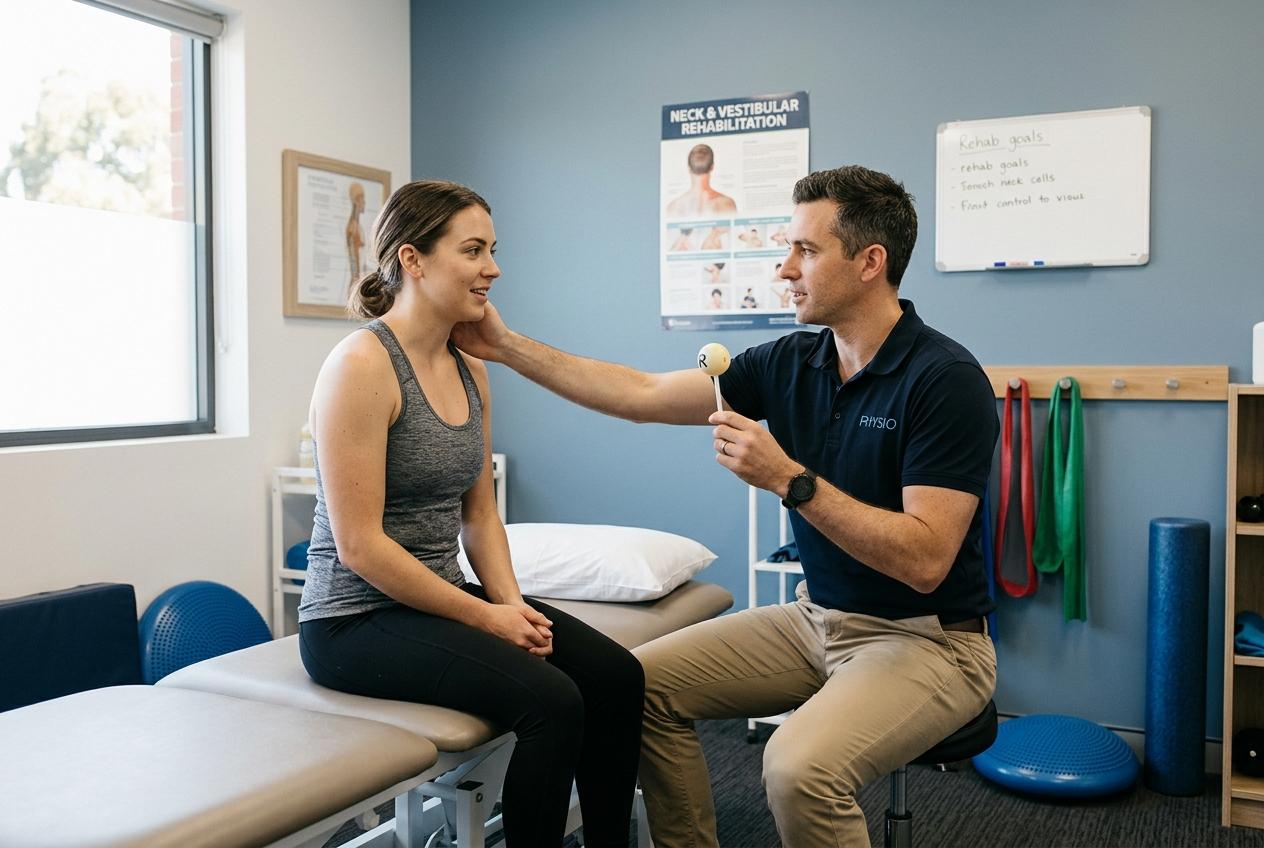
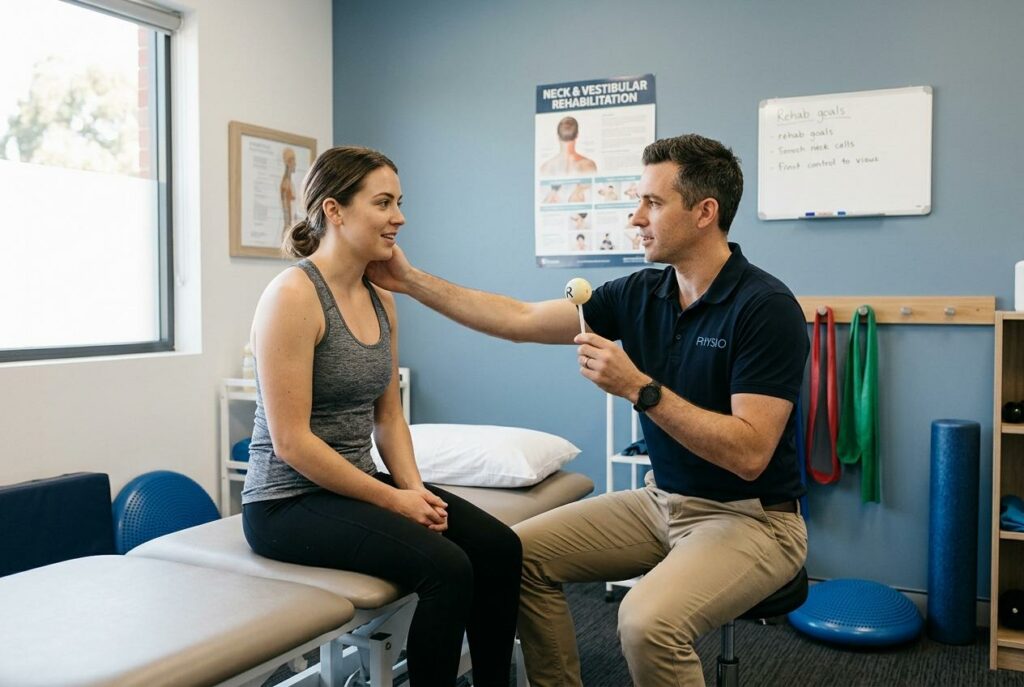
Your head is pounding, the world feels off-balance, and simple tasks that used to be automatic now feel overwhelming. After a concussion, you might wonder when it’s time to move beyond rest and seek professional help for your recovery. Running Shoe Restorative Healthcare provides comprehensive concussion care that can help address these complex symptoms.
You should consider seeing a concussion physiotherapist when symptoms persist, interfere with daily activities, or when you’re feeling ready to progress your recovery with professional guidance. The right timing depends on your specific symptoms and how they’re affecting your life.
Signs That May Point to Concussion Physiotherapy
Your body may be giving you clear signals when it needs professional help recovering from a concussion. Headaches that linger past the first few days may indicate that your brain and surrounding structures need targeted treatment to heal properly.
Balance problems and coordination issues can make you feel unsteady on your feet or cause you to bump into things more often. These symptoms suggest your vestibular system (the part of your inner ear that controls balance) may need tailored rehabilitation.
Physical Symptoms That Need Professional Care
Neck pain and stiffness often accompany concussions because the same impact that injured your brain may have affected your cervical spine. This combination of symptoms often responds well to hands-on treatment and targeted exercises.
Vision problems that affect your movement (like difficulty focusing or tracking objects) can make you feel disoriented in space. These issues may be improved with targeted exercises that retrain your visual and balance systems to coordinate more efficiently.
Light and sound sensitivity can trap you in dark, quiet rooms when your brain needs gentle, progressive stimulation to recover. A physiotherapist can help you gradually build tolerance to normal environmental conditions.
Cognitive Symptoms
Trouble concentrating at work might show up as difficulty reading emails, losing track of conversations, or feeling mentally exhausted after short periods of focus. Some cognitive symptoms may be influenced by physical factors such as vestibular dysfunction, neck issues, sleep disruption, or activity intolerance, which physiotherapy can help address.
Problems with routine tasks like cooking, driving, or grocery shopping can signal that your brain needs help relearning how to process information and coordinate movement. Professional guidance can help make these activities feel manageable again.
Sleep disruptions can affect your brain’s ability to heal and create a cycle in which poor sleep worsens your other symptoms. Physiotherapy can help by addressing the physical factors that interfere with quality rest, so you can sleep better.
The Timeline for Seeking Physiotherapy
The first 24–48 hours after your concussion should be focused on relative rest and monitoring your symptoms. Your brain needs this initial period to begin its healing process without additional stress or stimulation.
Between days 3–7, consider getting an assessment if your symptoms aren’t improving or are interfering with basic activities. Early evaluation may help identify which systems need support so you can get on the road to recovery.
After the early recovery phase, many people benefit from gentle, progressive rehabilitation. Though everyone is different, this general timeline allows for both rest and appropriate stimulation.
Early Recovery Phase Guidelines
Monitor your symptoms carefully during the first week. We recommend noting patterns and when they worsen or improve, which can help guide your treatment approach.
Gentle movements like short walks or basic household tasks can be helpful, but stop if symptoms get worse. Listen to your body: It can tell you when you’re pushing too hard.
Professional guidance for progression helps you safely advance your activity level and find the right balance between rest and gentle stimulation.
What Concussion Physiotherapy Can Address

Vestibular dysfunction and balance training target the inner ear systems that help you stay upright and oriented in space. These treatments can reduce dizziness and improve your confidence moving around.
Cervical spine alignment issues often contribute to headaches and neck pain after a concussion. Manual therapy and specific exercises can improve normal movement and help reduce discomfort.
Gradual return to physical activity follows structured protocols that protect your brain while rebuilding your tolerance for exercise and sports. Physiotherapy can help support recovery and improve readiness for returning to activity.
Targeted Treatments Available
Vision and coordination exercises may help improve how your visual and balance systems work together. These activities may improve focus, reduce visual fatigue, and make movement feel more natural for some people.
Neck mobilization techniques can address stiffness and restriction that contribute to headaches and movement problems. Gentle manual therapy can provide significant relief when combined with appropriate exercises.
How to Know If You’re Ready
Medical clearance from your doctor confirms that you’re stable enough to begin active rehabilitation. This step helps rule out serious complications before starting treatment.
Stable symptoms for 24+ hours means your condition isn’t rapidly changing, which indicates your brain may be ready for gentle, progressive challenges. Your ability to tolerate light activity without a significant increase in symptoms can indicate that your nervous system can handle mild stress. This tolerance is necessary for effective physiotherapy.
Red Flags That Require Medical Attention First
Worsening headaches despite medication can signal complications that need immediate medical evaluation. These symptoms may even require emergency care before rehabilitation is considered.
Repeated vomiting episodes or severe confusion indicate serious complications that need hospital assessment. Physiotherapy should wait until these symptoms resolve completely.
Getting Started with Concussion Care
A 1-on-1 assessment approach helps your physiotherapist focus entirely on your specific symptoms and needs. This personalized attention means the detailed evaluation and customized treatment planning are tailored to you.
Your personalized recovery timeline considers your symptoms, goals, and lifestyle to create realistic expectations for improvement. Evidence-based treatment protocols help you receive care that research supports for concussion recovery.
Book Your Physiotherapy Appointment
At Running Shoe Restorative Healthcare, we are committed to providing comprehensive concussion management with the dedicated attention your recovery deserves. If you’re looking for support with your concussion recovery, our team of experienced physiotherapists would love to help. Book an appointment and return to the activities that matter most.